2026-10-24 ·
How Spring Pollen Affects Air Ducts In Mint Hill Homes
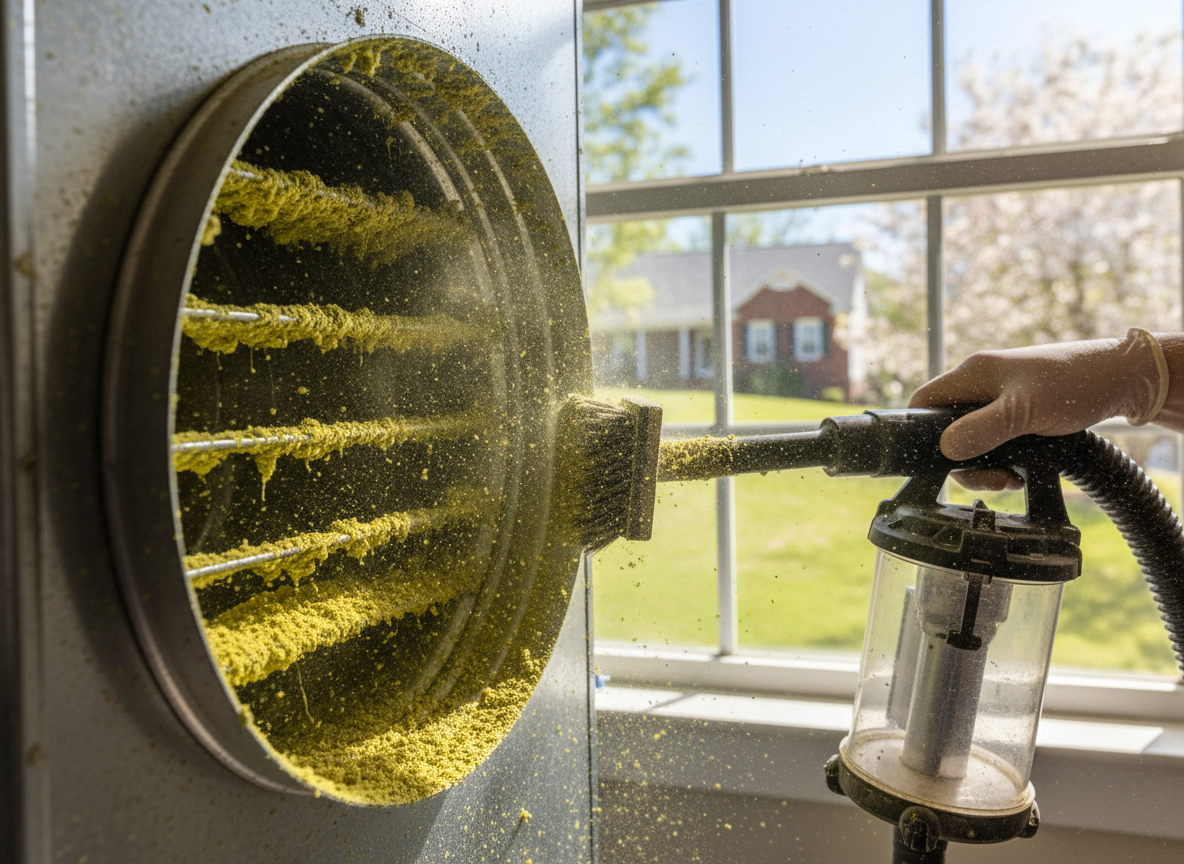
Spring pollen from trees and grasses common across Mecklenburg County enters Mint Hill homes through open windows and intake vents, then lodges in air ducts where it mixes with dust and reduces system efficiency over weeks of high counts.
Pollen Accumulation in Local HVAC Systems
Mint Hill sits in a humid subtropical climate that keeps pollen levels elevated from March into May, especially near Mint Hill Veterans Memorial Park and neighborhoods like Bainbridge. Homes in these areas often feature older ductwork from the 1980s and 1990s that contains more seams and bends where lightweight pollen grains settle. Once inside, pollen travels through the return air path and sticks to metal surfaces or fiberglass liners instead of being filtered out completely. Over time this layer thickens, forcing the blower motor to work harder during mild winter and hot summer transitions. Residents in The Farm at Mint Hill notice the difference first because newer construction still connects to the same regional pollen sources that blow in from surrounding fields and roads leading to Charlotte.
Effects on Airflow and Filter Performance
Pollen buildup narrows duct passages and coats filter media faster than in drier climates, cutting airflow by noticeable amounts within four to six weeks of peak season. In Mint Hill homes this means rooms farthest from the air handler receive weaker conditioned air, creating hot or cold spots that homeowners often misattribute to insulation issues. The added resistance also shortens filter life, so standard one-inch filters may need replacement every three weeks instead of monthly. Because the county experiences mild winters, many systems run continuously in fan mode for air circulation, pulling in fresh pollen daily and preventing natural settling. This cycle repeats each spring and compounds with the humidity that makes pollen more adhesive inside the ducts.
Indoor Air Quality Changes for Mint Hill Residents
Pollen trapped in ducts gets redistributed every time the system cycles, raising allergen exposure for households in Bainbridge and nearby subdivisions. People with seasonal sensitivities report increased sneezing and congestion even when windows stay closed, because the HVAC becomes a closed-loop pollen distributor. The humid subtropical conditions further allow pollen to absorb moisture, making particles heavier and more likely to cling to coil surfaces or duct walls rather than being exhausted outdoors. Over several seasons this accumulation can contribute to musty odors that appear when the system first starts after a period of disuse. Homeowners who live within a short drive of Charlotte often compare notes and find similar patterns tied to the same regional pollen counts.
Timing Professional Cleaning Around Local Seasons
Scheduling duct work after the heaviest tree pollen drops but before summer humidity peaks helps Mint Hill homeowners avoid re-contamination. A thorough cleaning removes the compacted layer that standard filter changes cannot reach, restoring original duct diameter and airflow. Properties along Matthews-Mint Hill Road or in The Farm at Mint Hill benefit from this timing because prevailing winds carry fresh pollen from open land to the east. Crews familiar with Mecklenburg County housing stock know which older homes have flexible duct sections that require gentler agitation tools. Performing the service during shoulder seasons also lets residents keep windows closed without discomfort while the system is offline for a few hours. Air duct cleaning for allergies addresses the specific pollen load common here, while residential air duct cleaning covers whole-house needs in established neighborhoods.
Related Considerations for Long-Term Duct Health
After spring cleaning, pairing the service with attention to humidity control reduces the chance of pollen re-adhering quickly in Mint Hill's climate. Checking insulation on attic ducts prevents condensation that turns light pollen into a sticky residue. Homeowners in Bainbridge often review their systems after major renovations because new construction dust can combine with the next pollen season. For ongoing reference, the post on humidity and mold risk in Mint Hill air duct systems explains how local weather patterns interact with duct conditions year-round.