Mint Hill homes in neighborhoods like Bainbridge and The Farm at Mint Hill often feature duct systems installed decades ago that trap moisture during the humid subtropical summers. When sudden spikes in humidity or post-storm debris enter through vents, mold colonies can form within 48 hours, especially in mild winter periods when homeowners run systems less frequently. Emergency calls frequently come from properties near Mint Hill Veterans Memorial Park where pollen loads from surrounding trees combine with construction dust from nearby Charlotte expansion projects.
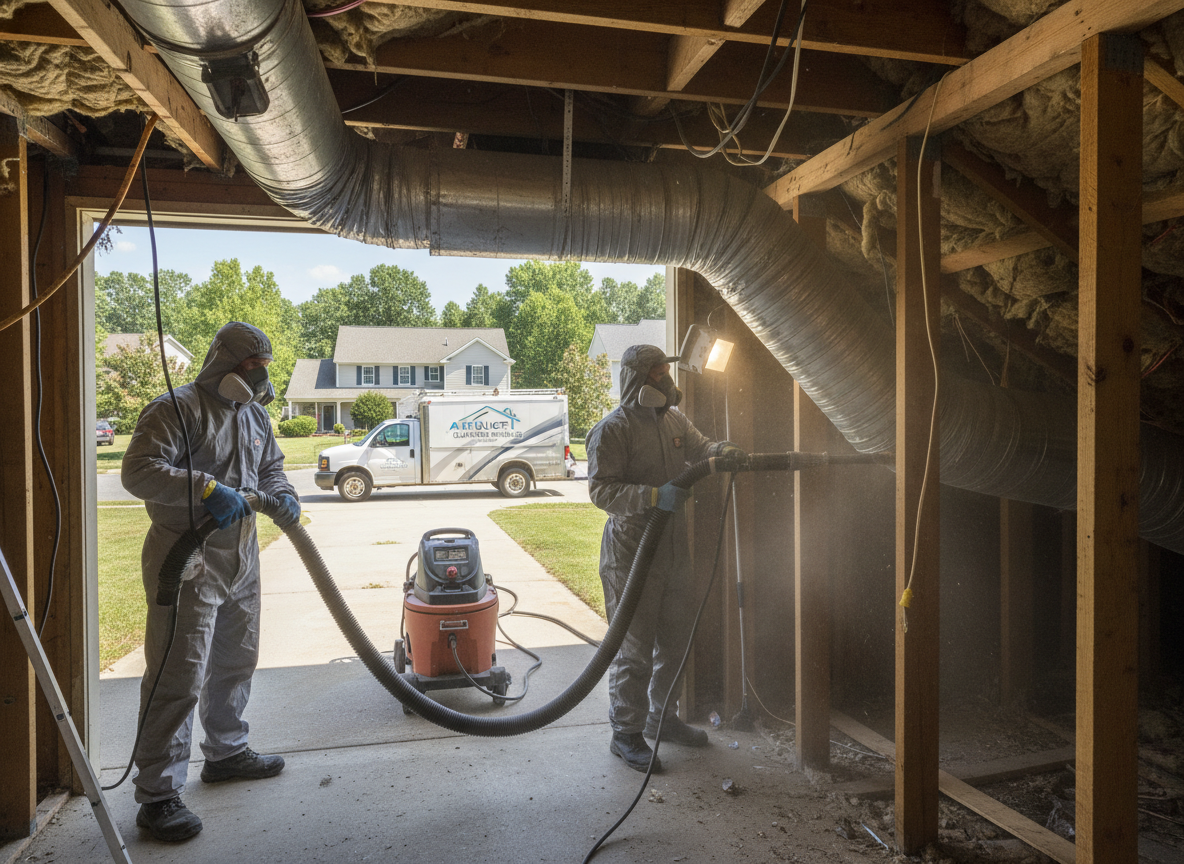
Technicians responding from the Matthews-Mint Hill Road base must first isolate affected runs using negative pressure to prevent cross-contamination into living spaces. Older flex duct common in Mecklenburg County homes tears easily during aggressive brushing, so crews use gentler rotary tools and HEPA-filtered vacuums rated for high-humidity environments. Failure to address hidden trunk lines in crawl spaces often leaves residual spores that reactivate once summer heat returns.
Homeowners sometimes attempt DIY vacuuming through registers, which only pushes material deeper into the main trunk and can damage dampers. Local code in Mecklenburg requires proper disposal of contaminated material rather than venting it outdoors, a step that emergency crews handle on-site to avoid neighbor complaints in denser subdivisions like Bainbridge.
Technician insight
In Mint Hill, the thing that catches most people out with Emergency Air Duct Cleaning is how quickly mild winter humidity lets mold take hold in the older flex duct runs common around The Farm at Mint Hill and Bainbridge. Homeowners run the system less in cooler months so they miss the early musty smell until it suddenly worsens after a warm spell.
Post-Rain Allergen Spike in Bainbridge
A family in Bainbridge noticed breathing irritation after several days of heavy rain. Inspection revealed moisture-laden pollen and construction dust packed into the main trunk line feeding bedrooms. Crews isolated the run, extracted the material under negative pressure, and restored airflow the same afternoon.
How it works
- 1
Initial Assessment
Arrive on-site and inspect accessible ducts, registers, and the HVAC unit to identify the source of the emergency condition.
- 2
Containment Setup
Seal off work zones with plastic sheeting and establish negative pressure to keep loosened debris from entering living areas.
- 3
Source Removal
Use HEPA vacuums and rotary brushes to extract buildup from trunk lines and branches without damaging older duct materials.
- 4
Verification and Reset
Run system post-cleaning, check airflow at multiple points, and restore normal operation before leaving the property.
Pricing
Emergency service outside regular hours carries a premium; final cost depends on system size, access difficulty, and extent of contamination.